


We are still wrestling with consciousness, and there is no real consensus on what it even is, let alone how to study it. Some treat it as synonymous with mind. Others see it as only one aspect of mentality. It can mean inner life — thought, imagination, intention — or it can mean any form of awareness, from sensory experience to reflective self-knowledge.
This piece is a short commentary on ideas explored in greater depth in my book Quantum Consciousness: Exploring mind, matter and universal consciousness as foundational field in a living cosmos available in my bookstore here.
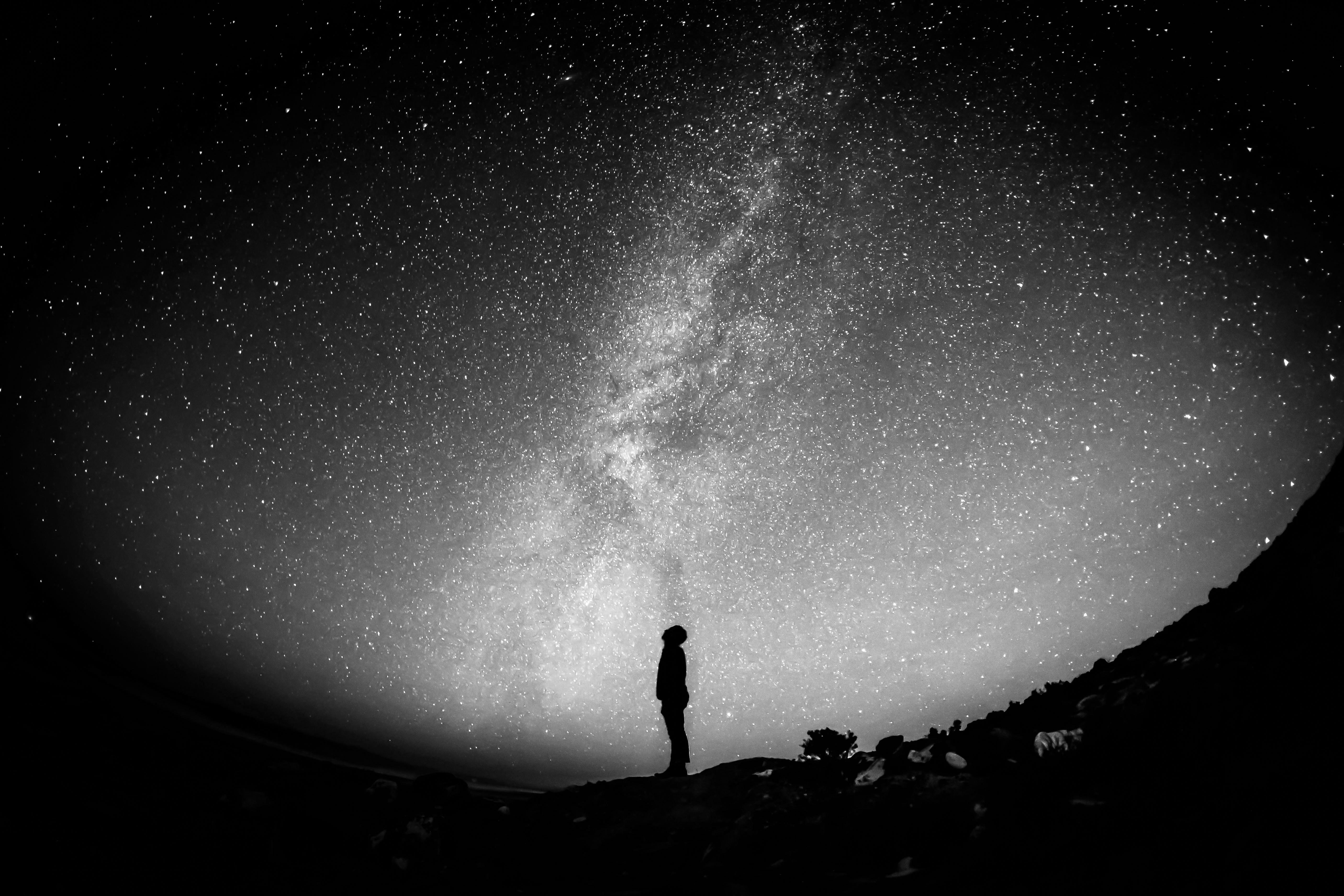
This confusion is precisely what David Chalmers famously labelled the hard problem of consciousness: how subjective experience — the felt, first-person quality of life — could possibly arise from physical processes.
To even begin, we have to separate three kinds of questions: what consciousness is, how it arises, and why it exists at all.
What consciousness is
Consciousness is both obvious and elusive. It is the medium of every experience we have, yet defining it feels like trying to bite your own teeth.
It appears in different forms. There is raw experience — the taste of coffee, the colour red — often called phenomenal consciousness. There is reflective awareness, when we notice our own thoughts. And there is narrative consciousness, the ongoing story we build about ourselves.
Across these modes, one thing holds: consciousness is qualitative. Experience doesn’t just happen; it feels like something. These felt textures, called qualia, populate our world with meaning.
This gives consciousness its strange architecture. Every experience is both event and perspective. Something happens, but it happens to someone. No two viewpoints are identical, which makes consciousness inherently personal.
At the same time, it is deeply integrative. Sensations, memories, emotions, and thoughts arrive as unified scenes, not fragments. Consciousness binds them into a continuous stream that allows us to interpret, plan, and act.
It isn’t a passive screen. It’s an organising process.
How consciousness arises
Here the divide is stark.
Reductionists assume consciousness must ultimately be explainable in physical terms. From this view, subjective experience should eventually follow from neural processes, computation, or physical law. We already track correlations between brain activity and experience. Perhaps the mystery will dissolve with better tools.
Holists aren’t convinced. Karl Popper argued that some phenomena are mechanical “clocks,” while others are dynamic “clouds.” Consciousness looks suspiciously like the latter — something that can’t be fully understood by disassembling it.
Philosopher Colin McGinn took this further, suggesting the problem might exceed human cognitive limits altogether. The gap between brain activity and lived experience may not just be unsolved. It may be unsolvable — at least for minds built like ours.
If so, consciousness may not be something produced by reality but something woven into it.
Why consciousness exists
Even if we solved the origin puzzle, a deeper question remains: what is consciousness for?
Some theories claim it serves no causal role at all. Historically associated with figures like René Descartes and Thomas Henry Huxley, epiphenomenalism holds that consciousness is a by-product — present but powerless, like steam from an engine.
Modern philosophers such as Frank Cameron Jackson refined this idea, arguing that even complete physical knowledge might fail to capture experience itself.
The intuition behind this is easy to grasp. Imagine a robot eating cake. It performs the motions flawlessly. But there is nothing it is like to be that robot. You, meanwhile, taste it, enjoy it, remember it. Behaviour can be identical while experience is absent.
That difference matters.
Consciousness gives experience moral weight — pain and joy matter because they are felt. It enables flexible decision-making rather than automatic reaction. It supports social life by letting us model other minds. And it integrates perception, memory, and intention into a navigable world.
In short, consciousness turns information into reality-as-lived.
Why the hard problem matters
Science is comfortable studying invisible things — particles, fields, dark matter. But those are inferred to explain observations. Consciousness is different. It isn’t hidden behind the data. It is the data of experience itself.
We can map neural activity, but we cannot directly observe what it is like to be another person. Reports and correlations only take us so far.
That’s why consciousness sits at the fault line between science and philosophy. Neuroscience tackles the what and how. Philosophy wrestles with the why. Both are needed.
Treating consciousness as a side issue risks building a science that explains everything except the fact that anything is experienced at all. A model of reality that accounts for observation but not experience is incomplete in the most literal sense.
This has led some researchers to a radical possibility: consciousness may not be a late by-product of complexity but a basic feature of the universe. Not something that appears inside a finished world, but something involved in bringing that world into form.
If that’s even partly true, then the hard problem isn’t academic. It’s a signal that our picture of reality may be missing one of its core ingredients.
And following that signal inevitably takes us into territory where physics, information, and observation start to blur — where reality looks less like a fixed object and more like an unfolding process.
Which is where the real story begins.
If you want to follow this line of inquiry further, I share extended essays, books, and research notes on my website
I also collaborate with authors and researchers as a developmental editor working in science, philosophy, and consciousness studies, helping them bring their complex ideas into publishable form
__________________________
Lieze Boshoff is an author and researcher exploring consciousness, metaphysics, and anomalous experience through the lenses of contemporary science, psychology, and philosophy. With a background in clinical psychology, neuropsychology, and doctoral research on consciousness and perception, her work examines reality as a participatory, holographic field in which mind and matter are inseparable. She writes at the intersection of science, symbolism, and the unseen, investigating how experience itself shapes the cosmos we inhabit.
If you’re interested in where this line of thinking leads — into consciousness, metaphysics, and the nature of reality itself — subscribe below. I share drafts, research notes, and early chapters as my work develops.
If this essay gave you pause, pass it on. These conversations only matter if more people are part of them.